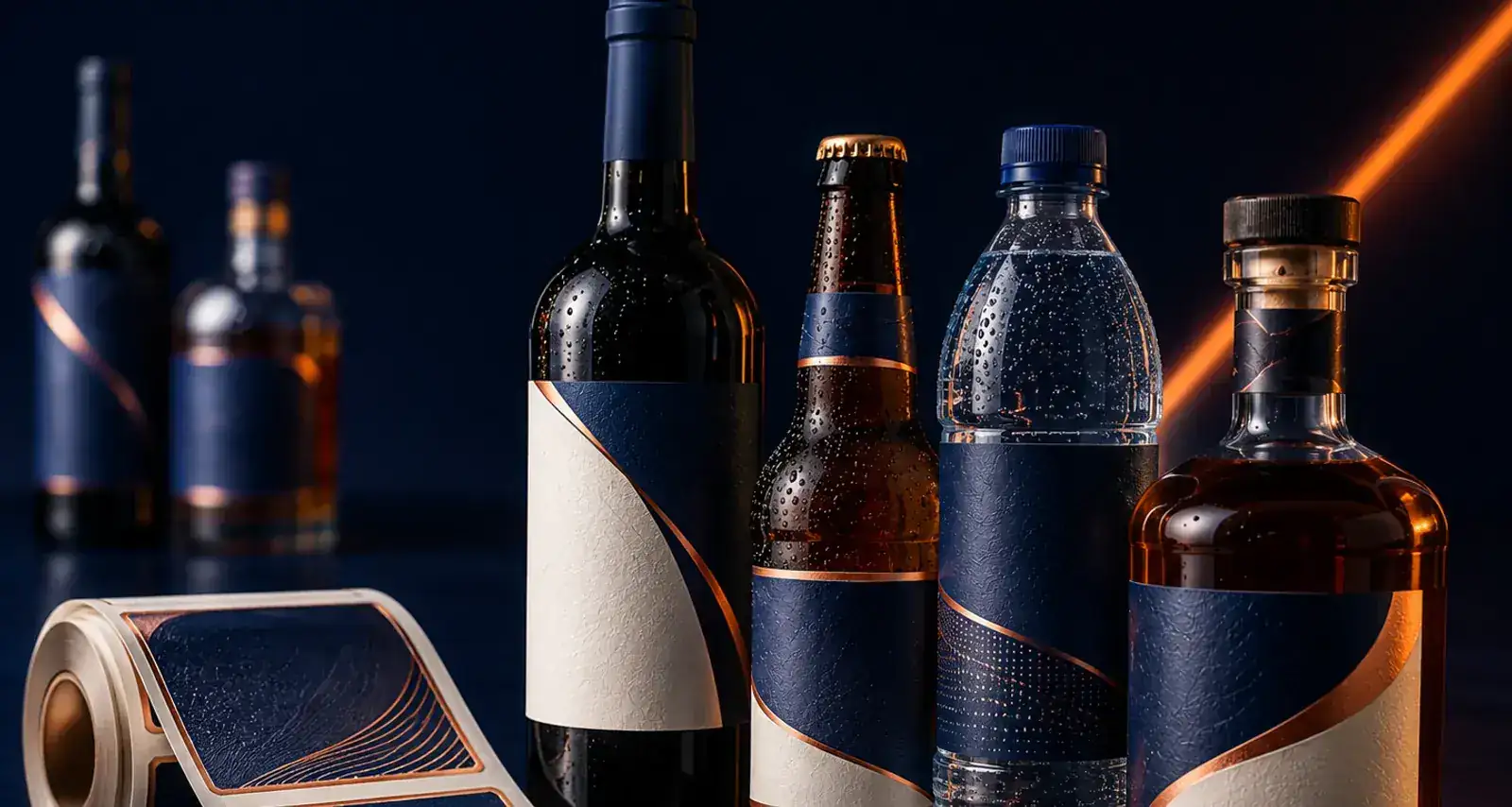
Choosing the wrong label material costs more than a reprint. It costs shelf space, customer trust and reorder cycles. Self adhesive labels are the most versatile label format available to South African product manufacturers, but the range of substrates, finishes and adhesive systems makes the wrong choice easy to arrive at without the right information. This guide covers everything procurement managers and business owners need to know before placing an order.
What Are Self Adhesive Labels and Why Do They Matter?
What is a self adhesive label?
A self adhesive label, also called a pressure sensitive label or sticker label, is a label printed on a substrate that has a pre-applied adhesive on the reverse, protected by a release liner. When the liner is removed and the label is pressed onto a surface, the adhesive bonds without heat, water or solvent activation. The result is a clean, professionally printed label that adheres permanently or removably depending on the adhesive system specified.
The construction has three layers: the face stock, which is the printable surface in paper, film or foil; the adhesive layer, which may be permanent, removable or freezer-grade; and the release liner, a silicone-coated backing that protects the adhesive until application.
How self adhesive labels differ from shrink sleeves and hot melt labels
Self adhesive labels apply to surfaces manually or via automated applicator machines. Unlike heat shrink sleeves, which require heat tunnels and conform to the container shape, adhesive labels are applied flat or with a slight wrap. Unlike hot melt glue labels, which are roll-fed directly onto cylindrical containers at high speed, adhesive labels work on almost any surface geometry including flat panels, contoured bottles, flexible pouches and rigid boxes.
This versatility is the primary reason adhesive labels are the most commonly specified format for new product launches, short runs and premium packaging across every South African industry segment.
Where self adhesive labels are used in South Africa
Every product category that requires a label uses adhesive sticker labels at some point in its lifecycle. Common applications include:
- Wine, spirits and craft beverage bottles for front, back and neck label applications
- Cosmetic jars, tubes and bottles where premium finish options include foil, soft-touch and emboss
- Food packaging including glass jars, stand-up pouches, tubs and flexible film
- Pharmaceutical and nutraceutical bottles requiring compliance labelling on synthetic paper or BOPP
- Cleaning and household chemical containers where durable BOPP or synthetic paper withstands wet environments
- Agricultural products requiring industrial-grade adhesive for outdoor exposure
- Retail and FMCG products on high-volume runs where coated paper delivers cost efficiency
The Seven Substrates and What Each One Does
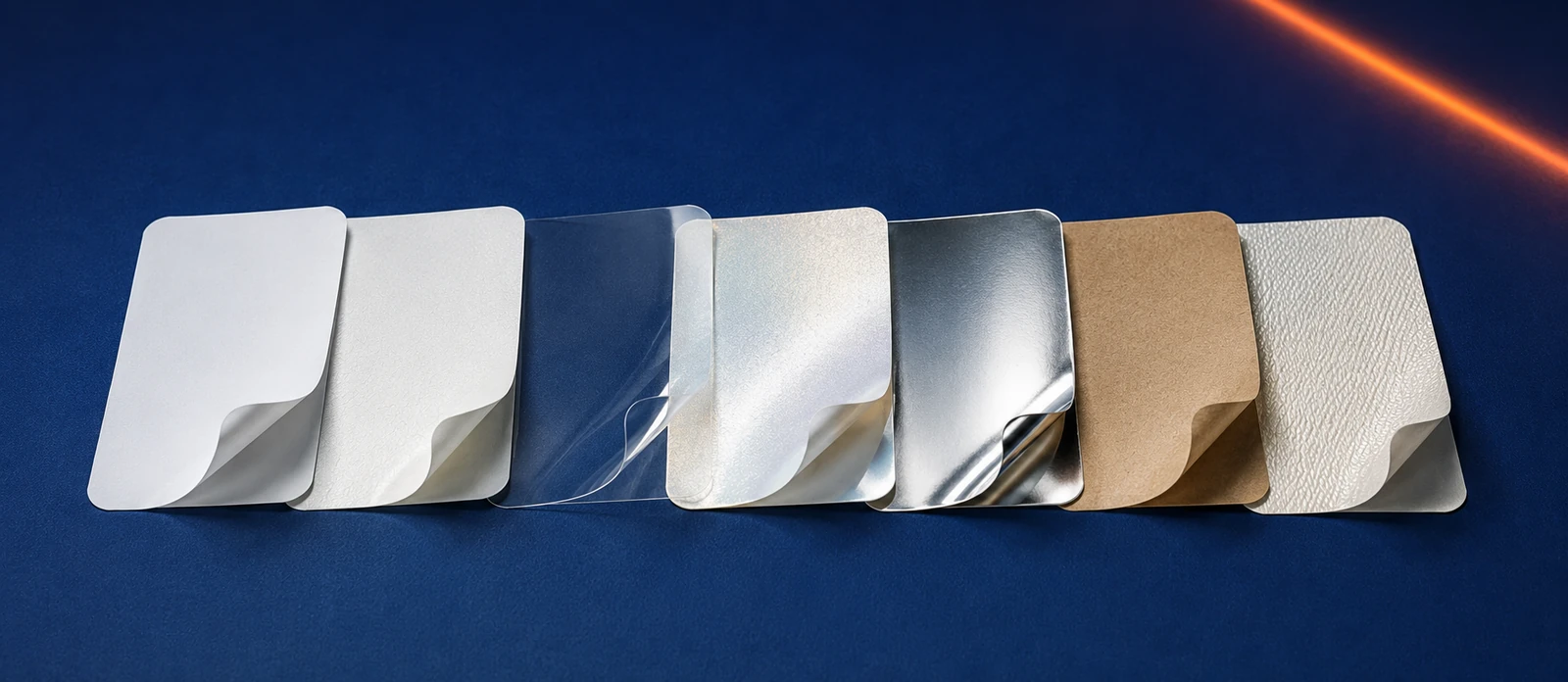
The substrate is the single most important decision in any adhesive label order. It determines print quality, durability, finish options and cost. Labelex manufactures on seven stock substrates. Here is what each one is built for.
Coated Paper
The standard substrate. Coated paper is the most cost-effective option for high-volume label printing. Available in matte and gloss finishes, it accepts ink cleanly with sharp colour reproduction and fine text. It performs best in dry environments as it is not waterproof and will deteriorate if exposed to moisture for extended periods.
Best for: FMCG, food, retail, dry product packaging, high-volume runs where cost per unit is the primary driver.
| Advantage | Limitation |
|---|---|
| ✓ Lowest cost per unit | ✗ Not waterproof |
| ✓ Excellent print quality | ✗ Tears under moisture |
| ✓ Matte and gloss options | ✗ Not suitable for cold chain |
| ✓ Widely available, fast lead time | ✗ Limited outdoor durability |
Synthetic Paper
Synthetic paper looks and prints like paper but is made from polypropylene film. It is tear-resistant, waterproof and dimensionally stable. It will not shrink or expand with temperature or humidity changes, and the surface accepts UV and water-based inks with the same clarity as coated paper.
Best for: Personal care, cleaning products, pharmaceutical, any label that will be handled in wet environments or stored in cold chain logistics.
| Advantage | Limitation |
|---|---|
| ✓ Fully waterproof | ✗ Higher cost than coated paper |
| ✓ Tear and puncture resistant | ✗ Opaque — cannot do no-label look |
| ✓ Cold chain compatible | ✗ Slightly reduced gloss depth vs BOPP |
| ✓ Paper aesthetic with film durability | ✗ — |
Transparent BOPP
Biaxially Oriented Polypropylene film in clear. BOPP is the substrate used to achieve the no-label look — where the label appears to be printed directly on the container. It is fully waterproof, tear-resistant and accepts high-quality printing with vibrant colours. The key technical requirement is correct artwork setup — any white ink areas must be precisely specified or the transparency will show unintended gaps.
Best for: Premium beverages, cosmetics, any product where container visibility is part of the brand story.
| Advantage | Limitation |
|---|---|
| ✓ No-label look | ✗ Artwork setup is critical |
| ✓ Vibrant colour reproduction | ✗ Air bubbles visible if poorly applied |
| ✓ Waterproof and durable | ✗ More expensive than paper |
| ✓ Premium shelf presence | ✗ Requires careful surface prep |
Pearlescent Film
A premium metallic substrate with a soft iridescent sheen that shifts between silver, gold and pearl tones depending on viewing angle and lighting. Pearlescent film elevates perceived product value immediately — it is the substrate most frequently specified for cosmetics, fragrance and premium food products where shelf standout is the brief.
Best for: Premium cosmetics, fragrance, gift products, wine and spirits, any product where premium positioning is the primary objective.
Bright Silver Film
A mirror-finish metallised film that delivers maximum reflectivity. Bright silver creates a bold, industrial-premium aesthetic used widely in health supplements, energy products and technical consumer goods. It accepts spot colour printing cleanly, with the silver base acting as a design element in its own right.
Best for: Supplements, energy products, hardware, electronics accessories, any product targeting a bold or technical brand aesthetic.
Kraft Paper
Natural brown recycled paper with visible fibre texture. Kraft communicates artisan, natural and sustainable brand values instantly. It prints well in muted tones and works beautifully with minimalist design systems. It is not waterproof and is best suited for dry product applications where the packaging story is as important as the product itself.
Best for: Artisan food products, coffee, honey, craft beverages, natural personal care, any brand positioning around sustainability or provenance.
Luxury Texture Paper
An embossed or textured paper substrate with a tactile surface that communicates premium quality through touch alone. Available in linen, laid, stipple and custom texture options. Luxury texture paper is the substrate of choice when the brief is premium retail or gift market positioning.
Best for: Premium spirits, luxury cosmetics, gift market products, high-end food and retail packaging.
All Seven Substrates — Side by Side
| Substrate | Waterproof | Premium Feel | Cost | Best Application |
|---|---|---|---|---|
| Coated Paper | ✗ | Medium | Lowest | FMCG, food, retail |
| Synthetic Paper | ✓ | Medium | Mid | Personal care, cleaning, pharma |
| Transparent BOPP | ✓ | High | Mid | Premium beverage, cosmetics |
| Pearlescent Film | ✓ | Very High | Mid-High | Cosmetics, fragrance, premium food |
| Bright Silver Film | ✓ | High | Mid-High | Supplements, energy, technical brands |
| Kraft Paper | ✗ | Artisan | Mid | Artisan food, coffee, natural brands |
| Luxury Texture | ✗ | Highest | Premium | Luxury spirits, gift, premium retail |
Five Factors That Determine the Right Label for Your Product
Material choice is not just an aesthetic decision. These five factors should drive every label specification decision before artwork is finalised.
01 The environment the label lives in
Where will the labelled product be stored, transported and displayed? A label on a cold beverage bottle will be exposed to condensation and coated paper will fail within hours. A cleaning product stored under a kitchen sink needs waterproof film. An artisan honey jar in a dry retail environment can use kraft paper without issue. Map the full product journey before choosing a substrate.
02 The surface it will be applied to
Different surfaces require different adhesive systems. Glass, high-density polyethylene, PET, polypropylene and stainless steel all have different surface energies. Low surface energy plastics like HDPE require high-tack adhesives or surface treatment before application. Curved, tapered or textured surfaces affect how the label conforms and whether air bubbles appear at edges. Discuss your container material and shape with your manufacturer before finalising the adhesive specification.
03 The brand positioning and retail context
A label is a brand communication tool before it is a product identifier. The substrate choice signals brand values immediately. Coated paper reads as mass-market, kraft reads as artisan, pearlescent reads as premium and luxury texture reads as exclusive. The label material must be consistent with the price point and retail environment the product sits in. A premium gin in a R400 bottle on a boutique shelf demands a different substrate than a household cleaner in a R35 bottle on a pharmacy shelf.
04 The volume and how it affects cost
Label cost per unit drops significantly with volume. At lower quantities, the substrate cost as a percentage of total job cost is higher — meaning premium substrates like pearlescent or luxury texture are viable even at moderate volumes. At very high volumes, coated paper or synthetic paper deliver the best cost-per-unit economics. The minimum order at Labelex is R3,000 across all substrates, making short-run premium labels accessible for new product launches and limited editions.
05 The finish and its effect on print quality
Every substrate accepts different print finishes. Coated paper and synthetic paper work well with matte laminate, gloss laminate and spot UV. BOPP takes foil stamping and embossing. Kraft paper suits uncoated or soft-touch finishes only, as heavy lamination changes its natural aesthetic. Luxury texture paper is specified precisely because the surface texture itself is the finish. The finish decision must be made at the same time as the substrate decision as they are inseparable.
Real World Scenarios: Which Substrate Wins
When coated paper or synthetic paper is the right call
A Gauteng-based FMCG manufacturer producing a 50,000-unit run of a household cleaning range needs labels that are waterproof, durable and cost-efficient. The product is a mid-market offering at a competitive retail price point. The containers are white HDPE trigger spray bottles. The correct specification here is synthetic paper with a gloss laminate. It is waterproof, durable and cost-effective at volume, and delivers clean print quality on a straightforward label design. Coated paper would fail immediately under spray and handling. BOPP would be technically correct but adds unnecessary cost without brand benefit for this market position.
When BOPP, pearlescent or luxury texture is the right call
A Cape Town craft gin distillery launching a premium 750ml bottle at R380 retail needs labels that communicate exclusivity from across the room. The bottle is clear glass and showing the gin colour is part of the brand story. The front label specification is transparent BOPP with spot UV highlight and foil detail. The back label is luxury texture paper with uncoated print. Together they create a tactile, visually premium package that justifies the retail price and performs on boutique shelves, in online photography and in gifting contexts. Coated paper or synthetic paper would undermine the brand positioning immediately.
How a Specialist Label Manufacturer Makes This Decision Easier
The substrate decision is one of dozens of technical choices in a label order. Adhesive system, print method, finish type, die-cut shape, liner specification and application method all interact with each other. Getting one wrong affects all the others.
A specialist label manufacturer, as opposed to a general print shop or stationery supplier, carries the technical knowledge to advise on every element of the specification before artwork is finalised. That means fewer reprints, no failed applications on your production line and labels that perform exactly as specified from the first roll.
The questions worth asking any label manufacturer before placing an order are straightforward. What adhesive system do you recommend for my container material? What finish options are available on this substrate? What is the minimum label thickness for my applicator machine? Can you provide a physical sample before the full run is produced? A manufacturer that cannot answer these questions clearly is not the right partner for a production-ready label order.