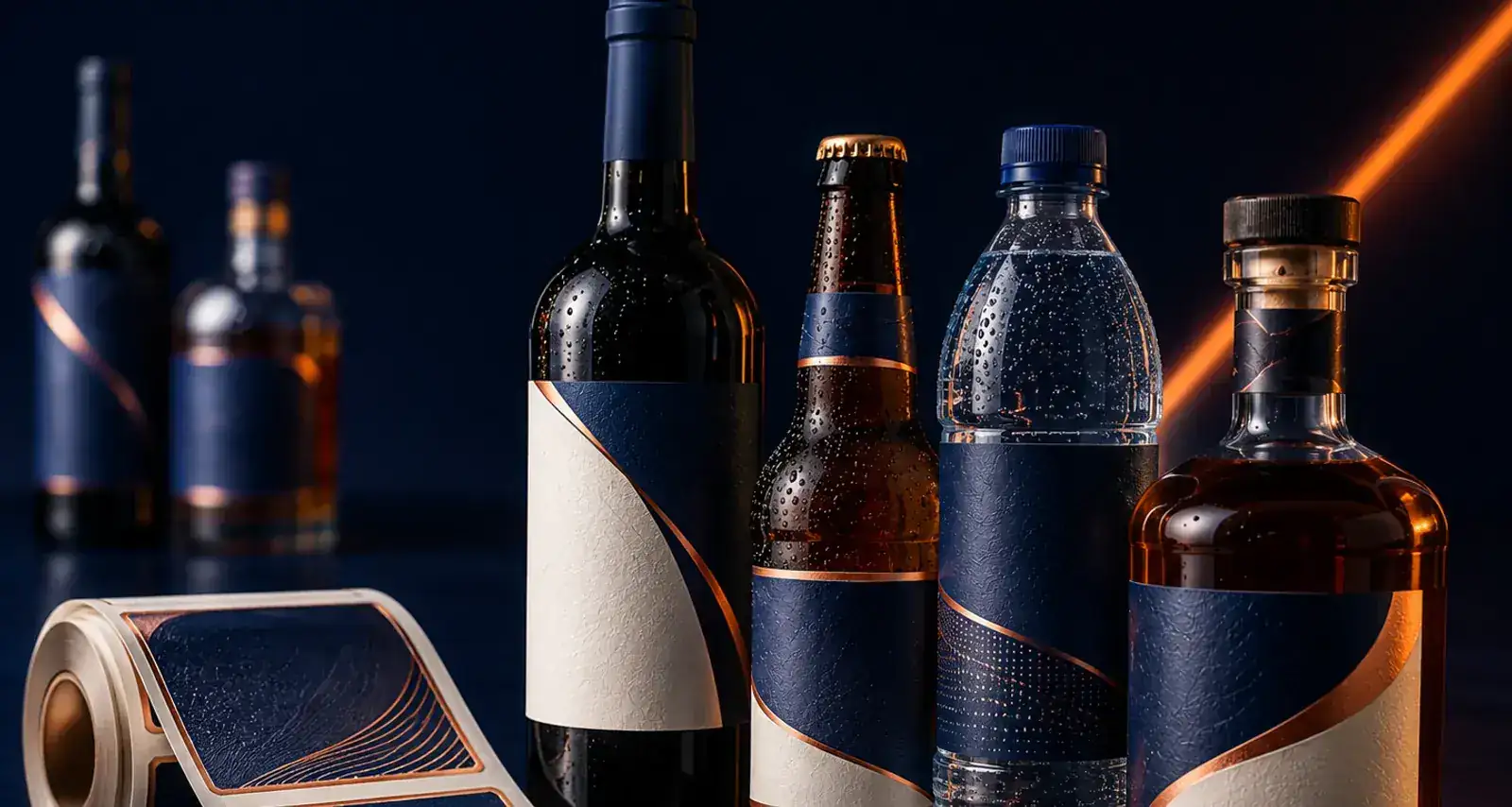
Beauty buyers judge a product before they pick it up. The label does the work — and cosmetic packaging in South Africa has to clear three bars at once. It needs to look premium enough to compete with imported brands on the shelf. It needs to withstand the contact with creams, oils, water and alcohol that household cosmetic use puts it through. And it needs to meet the compliance requirements that the Department of Health and CTFA place on every consumer-facing cosmetic sold in South Africa. This guide covers the material choices, finishes, regulatory minimums and production realities that procurement managers and beauty brand founders need to know before placing a cosmetic label order.
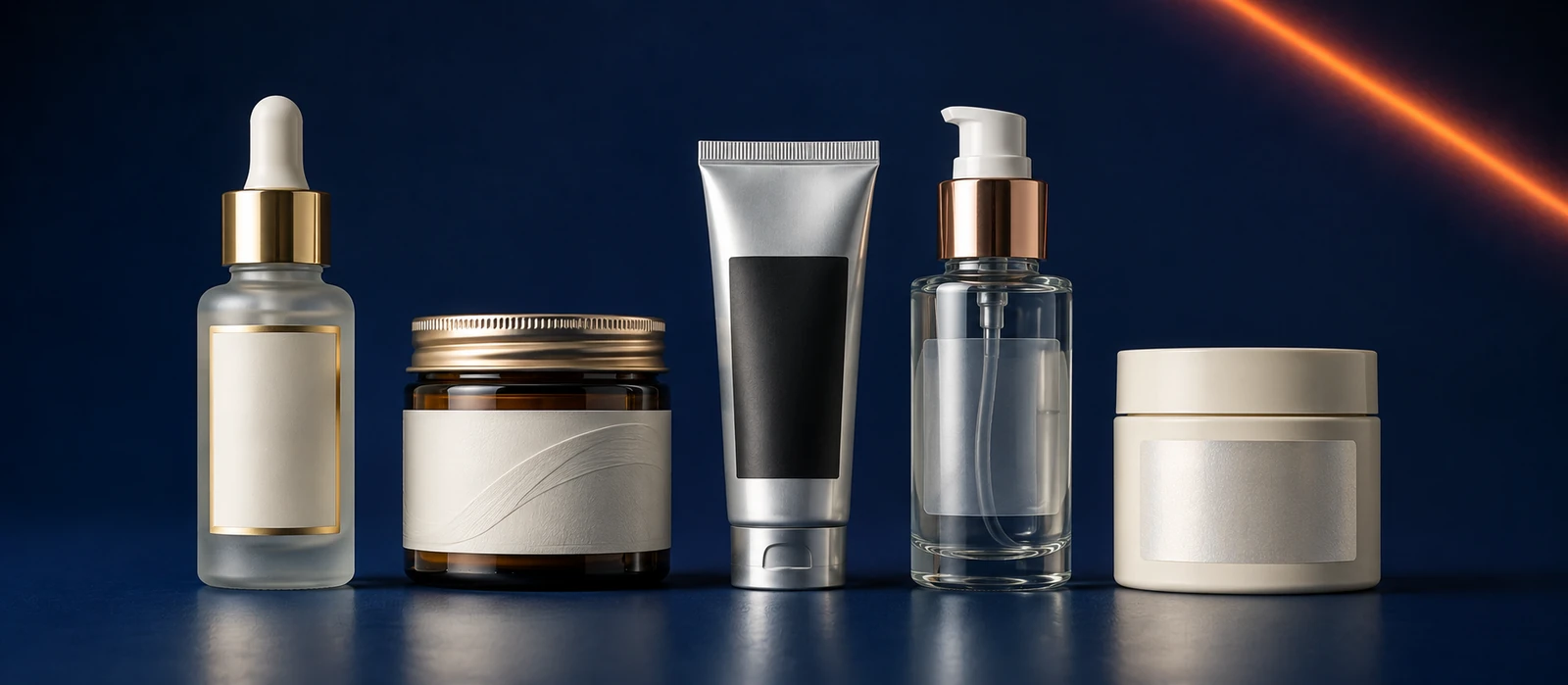
Why Cosmetic Labels Are Different to Every Other Product Label
Cosmetic labels operate under stricter conditions than almost any other label format. A label on a wine bottle sits on a shelf and gets handled once at point of sale. A label on a moisturiser sits in a bathroom for months, gets touched daily with wet hands, faces condensation, alcohol from toners and oils from creams, and is the customer's primary visual cue every time they reach for the product. Three things make cosmetic labels distinct.
The premium expectation
South African beauty shoppers compare local brands directly against imported European, Korean and American cosmetics on the same shelf. The label is the visual signal that says "this product is at the same quality tier as the imports". A cosmetic label that looks cheap drags down perceived product quality even when the formulation is excellent. This is why premium finishes — foil stamping, soft-touch lamination, spot UV, embossing — are not optional extras in cosmetic packaging. They are the baseline expectation for any brand competing above the entry-level price point.
Container and product compatibility
Cosmetic products contain solvents, oils, alcohols and water. They sit in containers that face bathroom humidity, shower steam and direct skin contact. The label has to bond to plastic, glass, anodised aluminium and tube laminate — surfaces with very different surface energies. The adhesive system specified for a cosmetic label has to survive all of this for the entire shelf life and use cycle of the product, which for many cosmetics is two to three years. Get the substrate or adhesive wrong and you see curling, lifting, ink fade or label discolouration within months.
The regulatory load
Every cosmetic product sold in South Africa must comply with the Department of Health's labelling requirements, the Foodstuffs, Cosmetics and Disinfectants Act, and the voluntary CTFA (Cosmetic, Toiletry and Fragrance Association of South Africa) code that most reputable retailers require. Mandatory information on the label includes ingredients listed in INCI format, net contents, country of origin, batch number, period after opening, and the responsible party. None of this is optional — labels that omit required information are rejected by retailers and exposed to regulatory action.
The Substrates That Work for Cosmetic Packaging
Cosmetic brands typically choose from six substrate categories when specifying labels. Each one has a positioning, a price point and a set of products it suits best. Choosing the right substrate is the single biggest decision in any cosmetic label order — it determines premium feel, durability and cost in roughly equal measure.
Pearlescent
Pearlescent stock has a luminous, iridescent shimmer that catches light at every angle. It is the standard premium substrate for cosmetic packaging that wants to signal quality at first glance. Pearlescent labels work especially well for skincare, fragrances and premium body care where the brand position is luxury or aspirational. The shimmer adds visual depth that flat printed paper cannot match, and it pairs beautifully with foil stamping for brands targeting the gift and prestige segments.
Clear BOPP — the "no-label look"
Clear BOPP is a transparent polypropylene film that creates the illusion of the design being printed directly onto the container. It is the standard choice for serums, oils, liquid foundations and any cosmetic where the product colour is itself a brand asset. To work properly, clear BOPP labels need to be printed with a white-ink underlay on any solid colour or text that needs to appear opaque — this is a print-stage decision that affects both cost and proof approval and must be specified clearly at quote stage.
Metallic foil substrates
Bright silver and gold metallic film substrates create a fully metallic label face that signals luxury. They are typically reserved for high-end cosmetics, gift sets, limited editions and brands competing in the prestige segment. The entire label face is reflective metallic — different to foil stamping, which applies metallic accents to specific design elements. Metallic substrates work especially well on darker container colours where the contrast amplifies the reflective effect.
Soft-touch synthetic
Soft-touch synthetic substrates feel like velvet or suede to the hand. The tactile experience is a major brand signal — when a customer picks up a soft-touch label and runs their thumb across it, the message is "premium, considered, expensive". Soft-touch is increasingly used in cosmetic packaging for skincare, fragrances and any product where the in-hand experience is part of the brand story. The substrate also has excellent print quality and accepts foil stamping cleanly.
White synthetic and BOPP
White synthetic paper and white BOPP film are the workhorse substrates for cosmetics that face wet environments — shampoos, body washes, shower gels, conditioners. They are durable, waterproof, tear-resistant and accept print well. They are also cost-effective compared to pearlescent and metallic options, which makes them the right choice for mid-tier cosmetic ranges, salon professional lines, and any cosmetic where the container will be regularly wet during use.
Premium uncoated and kraft paper
Premium uncoated paper and kraft substrates appeal to brands positioning themselves as natural, organic, botanical or eco-conscious. The unfinished texture and warm paper feel communicate craft and natural ingredients in a way that synthetic substrates cannot. These substrates are commonly used by indie cosmetic brands, organic skincare lines, and natural beauty ranges. Note that uncoated paper is not waterproof — for products that face regular water contact, a water-resistant lamination or coating is usually added.
What South African Regulations Require on Cosmetic Labels
The regulatory baseline for cosmetic labelling in South Africa is set by the Foodstuffs, Cosmetics and Disinfectants Act, supplementary regulations from the Department of Health, and the voluntary code maintained by the CTFA. Most major retailers — Clicks, Dis-Chem, Woolworths, Edgars — require compliance with the CTFA code as a condition of stocking. Here is what your label must include.
Department of Health compliance
Every cosmetic product sold in South Africa must be labelled in a way that allows the product to be identified, its safe use to be understood, and its responsible party to be contacted. Mandatory information includes the product name, the function of the product (e.g. "moisturising body lotion"), the name and address of the responsible party (manufacturer, distributor or importer), and any warnings required for specific ingredient classes (sunscreens, hair dyes, skin-lightening products and several others have additional warning requirements).
INCI ingredient listing
All cosmetic products must list ingredients in descending order of concentration using International Nomenclature of Cosmetic Ingredients (INCI) names. INCI names are standardised across the world, which is what allows a customer to compare the ingredient list of a SA-manufactured moisturiser against an imported one. The list is typically the most space-constrained element of any cosmetic label and is often printed in the smallest type size the label space allows. Print legibility at small type sizes is itself a manufacturing competence — and it is one of the things that distinguishes properly-produced cosmetic labels from amateur runs.
Batch number and period after opening
Every cosmetic must display a batch number traceable to the production run, and either an expiry date or a Period After Opening (PAO) symbol. The PAO symbol is the small open-jar icon with a number followed by "M" — for example "12M" means the product is safe to use for 12 months after the seal is broken. Batch numbers and dates are typically applied at the production line via overprint or inline coding, but the space and format must be designed into the label artwork from the start.
Country of origin and "Made in South Africa"
The country of manufacture must be stated on the label. For locally produced cosmetics, "Made in South Africa" or "Manufactured in South Africa" is a positive brand signal — particularly for the rising number of consumers who actively seek to support local manufacturing. The Proudly South African mark is available to certified brands and is increasingly recognised on cosmetic shelves.
Net contents declaration
The net quantity of the product must be displayed clearly, typically on the front panel or principal display area, in metric units (millilitres for liquids, grams for solids). South Africa uses standard SI units. Retailers verify net contents declarations and rejected stock from non-compliant declarations is a real risk for new cosmetic brands launching their first runs.
Compliance reality check: Most cosmetic label rejections at retail acceptance are not formulation issues — they are label compliance issues. Missing PAO symbols, illegible INCI listings and incorrect net content placement are the three most common reasons a launch SKU is sent back. Building compliance into the artwork before production is far cheaper than reprinting after rejection.
Container Types and How to Match Labels to Them
Cosmetic packaging comes in dozens of container formats, and each one places different demands on the label. The container type drives substrate choice, label shape, adhesive specification and finish options. Here is how the most common cosmetic containers map to label decisions.
Glass jars (creams, balms, masks, scrubs)
Glass cosmetic jars are typically labelled on the lid (top), the base (front-facing wraparound) or both. The flat lid surface is well-suited to small premium labels with foil stamping or embossing. The cylindrical base of the jar accepts wraparound adhesive labels, but the curve diameter has to be considered — small jars (under 30mm diameter) need labels designed with the curve in mind to prevent edge lift. Glass surfaces are easy to bond to with standard permanent adhesives.
PET and HDPE bottles (lotions, shampoos, conditioners)
Plastic bottles are the workhorse of cosmetic packaging. They face the most aggressive conditions — bathroom humidity, water splash, regular handling with wet hands. White synthetic or white BOPP with permanent waterproof adhesive is the standard specification. The label typically wraps around the bottle as a single front-and-back label or splits into separate front and back panels. Curve diameter matters — narrow bottles need labels with extra dwell time during application to prevent edge lift.
Pump dispensers and airless containers
Pump bottles and airless cosmetic containers usually have a smaller labelling surface than equivalent screw-cap bottles because the pump mechanism takes up vertical space. Labels for these containers are typically taller and narrower than standard, and they need to accommodate the curve of the bottle body without distorting the design. Airless containers are popular for premium skincare because they extend product shelf life and prevent contamination — the label design should signal the premium positioning these containers imply.
Squeeze tubes (creams, gels, hair products)
Cosmetic tubes use a different labelling approach — typically the label is either printed directly onto the tube laminate (no label, but full-tube graphic) or a partial wrap label that covers the cylindrical body. Tube labels need to flex with the tube as it is squeezed without ink cracking or label lifting. BOPP is the standard substrate for tube labels because it tolerates flex without damage.
Sachets, single-use foils and travel sizes
Small format cosmetic packaging — single-use sachets, foil sample packs, travel sizes — places extreme demands on label design and substrate. Print must be legible at tiny sizes, finishes must be cost-effective at low unit values, and many sachets are themselves the label (printed flexible film with no separate label component). For travel-size bottles and minis, the same substrates as full-size containers apply but in smaller label dimensions.
Premium Finishes That Sell Beauty Products
Finishes are how cosmetic labels signal price tier. The same printed design can read as mass-market or as prestige depending purely on the finish treatment applied. Five finish categories dominate premium cosmetic packaging.
Foil stamping (gold, silver, copper, rose gold, holographic)
Hot foil stamping applies metallic foil to specific design elements — typically the brand name, logo or key product descriptors. The result is a reflective metallic accent that no print process can replicate. Gold foil signals luxury and warmth. Silver foil reads as modern, clinical or scientific (well-suited to active skincare). Rose gold has become the default for contemporary beauty brands. Copper signals warmth and natural positioning. Holographic foils create a rainbow-shift effect that works for colour cosmetics, kids' beauty products and limited editions.
Spot UV (selective gloss varnish)
Spot UV applies a high-gloss UV varnish to specific design elements while leaving the surrounding label area matte. The contrast between gloss and matte creates visual hierarchy — the eye is drawn to the gloss element first. Spot UV is commonly used to highlight the brand name, frame the product name, or accent a key product claim. It is more cost-effective than foil stamping while delivering similar visual impact.
Embossing and debossing
Embossing creates a raised three-dimensional design element on the label surface. Debossing pushes the element down into the label surface. Both are tactile finishes that the customer feels when handling the product. Embossed brand marks on cosmetic labels signal craftsmanship and premium positioning, particularly when combined with foil stamping (a technique called "foil emboss" or "combination stamp" that produces a raised, foiled element).
Soft-touch lamination
Soft-touch lamination applies a velvety, matte film over the entire label face. The result is a label that looks matte but feels distinctly different to the hand — almost suede-like. The tactile experience is a strong premium signal and increasingly used by skincare brands targeting the mid-to-upper price tier. Soft-touch labels also tend to resist fingerprint marking better than gloss laminations.
Holographic and iridescent effects
Holographic substrates and iridescent foils create rainbow-shifting effects that move as the label is viewed from different angles. These finishes are popular for colour cosmetics, festive limited editions, kids' beauty products, and any cosmetic brand targeting a younger or trend-led audience. They are visually attention-grabbing on shelf, which makes them well-suited to launch SKUs and new range introductions.
How to Brief a Cosmetic Label Manufacturer (and Avoid Reprints)
Most cosmetic label reprints happen because the brief was incomplete at quote stage. The manufacturer cannot proof what was not specified. Here is the information your label manufacturer needs to give an accurate quote and produce labels right the first time.
What to provide at brief stage
- Container specifications: material (glass, PET, HDPE, aluminium, tube laminate), dimensions, diameter, and where on the container the label will sit
- Label dimensions: width and height of the label, and whether it is a single label or front-and-back set
- Substrate preference: if known. If unsure, describe the brand positioning (premium / mid-tier / mass / organic / luxury) and the manufacturer will recommend
- Finish requirements: any premium finishes — foil stamp, spot UV, emboss, soft-touch
- Print colours and registration: CMYK process, spot Pantone colours, or both
- Quantity: minimum and reorder quantities. Helps manufacturer recommend production method (digital for short runs, flexographic for longer)
- Timeline: when you need the labels in hand, and any retailer ranging deadlines
- Compliance review: whether you have already had artwork reviewed for INCI listing, PAO symbol placement and net contents, or whether you need the manufacturer to flag compliance gaps
The five most common briefing mistakes
- No container sample provided. Manufacturers need to see the actual container to confirm curve compatibility and adhesive specification. Photographs from a supplier catalogue are not enough.
- Artwork in RGB instead of CMYK. Cosmetic label artwork must be supplied in CMYK colour mode with any spot colours called out as Pantone references. RGB artwork produces colour shifts at print stage.
- No bleed on the artwork. Cosmetic labels need 3mm bleed beyond the trim line to prevent white edges. Artwork supplied without bleed has to be rebuilt before production.
- Missing INCI list or missing PAO symbol. Compliance information assumed by the brand but not actually present in the artwork is the most common cause of rejected first runs.
- Approving the digital proof on a phone screen. Digital proofs must be reviewed on a colour-calibrated screen at full label size. Phone screens distort colour and scale, leading to surprised disappointment when the printed labels arrive.
Pre-production approvals
Before any cosmetic label goes into production at Labelex, you will receive a digital proof of the artwork at full size with all finishes specified. For premium finish runs (foil, emboss, spot UV) we also offer pre-production samples on the actual substrate so you can hold the physical label before committing to the full run. Pre-production samples add a few days to the lead time but eliminate the risk of full-run reprints — for premium cosmetic launches this is almost always the right call.